Elastic IP Address
Elastic IP Address


Document

- Documentation
 Elastic IP AddressBest PracticesCombining EIP with GTM to implement Internet traffic scheduling and disaster recovery
 Copy page
 Download PDF
Best Practices
Combining EIP with GTM to implement Internet traffic scheduling and disaster recovery
Copy pageDownload PDFCombining EIP with GTM to implement Internet traffic scheduling and disaster recovery
If you deploy services in multiple regions, you can use GTM to add Elastic IP Addresses (EIPs) from multiple regions, achieving Internet traffic scheduling and disaster recovery switchover. This topic describes relevant application scenarios.
Traffic scheduling
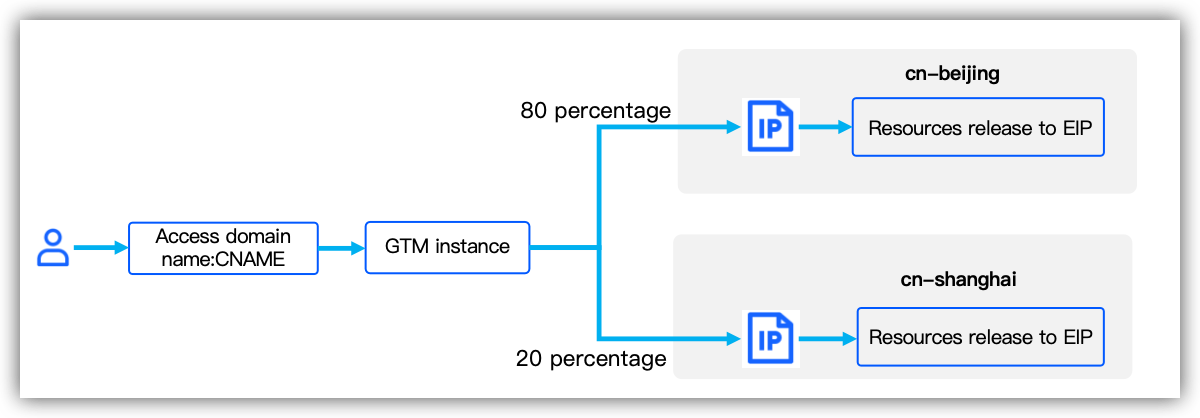
CLB-based traffic scheduling
If you deploy services in multiple regions, you can set weight for their EIPs in a GTM instance based on the traffic capacity of each region. When Internet users access the domain name, the system returns EIPs based on weight to achieve balanced traffic distribution. For more details, see GTM Getting started.
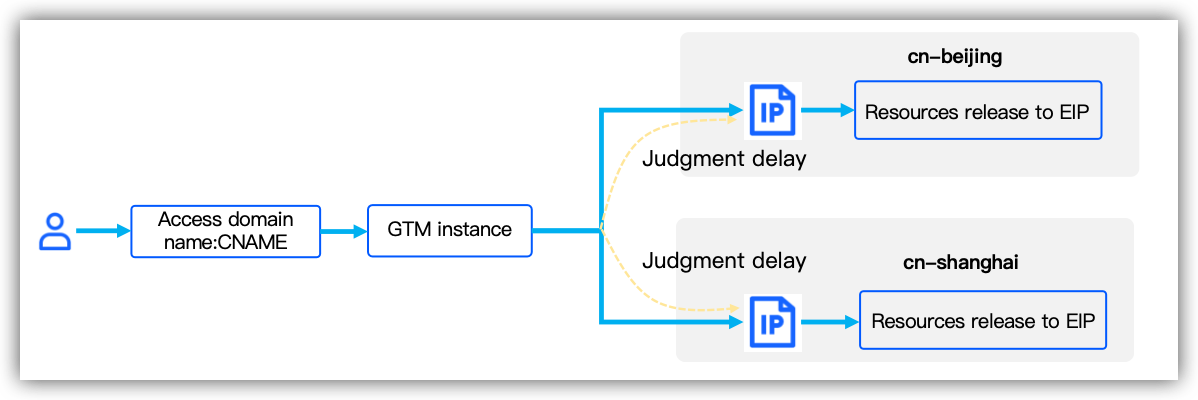
Latency-based traffic scheduling
If you deploy services in multiple regions, to enable Internet users in different regions to access nearby, you can set a performance-optimized policy for EIPs in the GTM instance. When Internet users access a domain name, the system returns the EIP with the lowest latency to the users, achieving traffic scheduling. For more details, see Configuring a GTM instance.
Disaster recovery failover
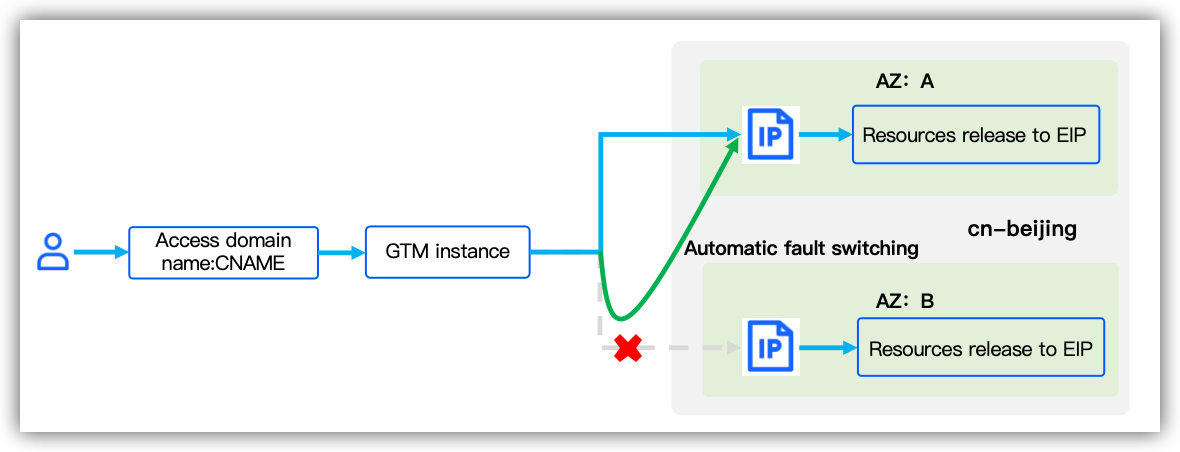
Intra-city disaster recovery
Services are deployed across different availability zones in the same region. When cloud resources in an availability zone become unavailable, GTM blocks the EIPs attached to those resources and automatically switches traffic to an available availability zone. For more details, see Internet service intra-city disaster recovery.
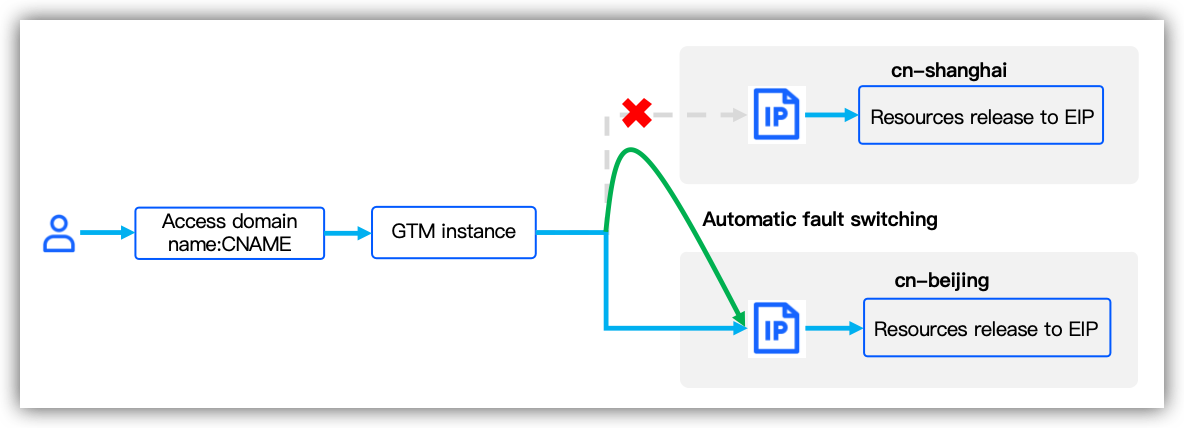
Cross-region disaster recovery
Services are deployed across multiple regions. When a region becomes unavailable, GTM automatically blocks the EIPs of that region and switches traffic to an available region. For more details, see Cross-region Disaster Recovery.
Last updated: 2026.06.11 10:35:19
All rights reserved © Beijing Volcano Engine Technology Co., Ltd2024
