Database Transmission Service
Database Transmission Service


Document

- Documentation
 Database Transmission ServiceBest practicesData migrationMySQL database bidirectional synchronization
 Copy page
 Download PDF
Data migration
MySQL database bidirectional synchronization
Copy pageDownload PDFMySQL database bidirectional synchronization
Database Transmission Service (DTS) supports MySQL database bidirectional synchronization. MySQL database bidirectional synchronization applies to multiple application scenarios, such as multi-site high availability (unitization) and cross-region data disaster recovery.
Bidirectional synchronization topology
Topology type | Topology diagram | Features |
Single-write and multi-read | 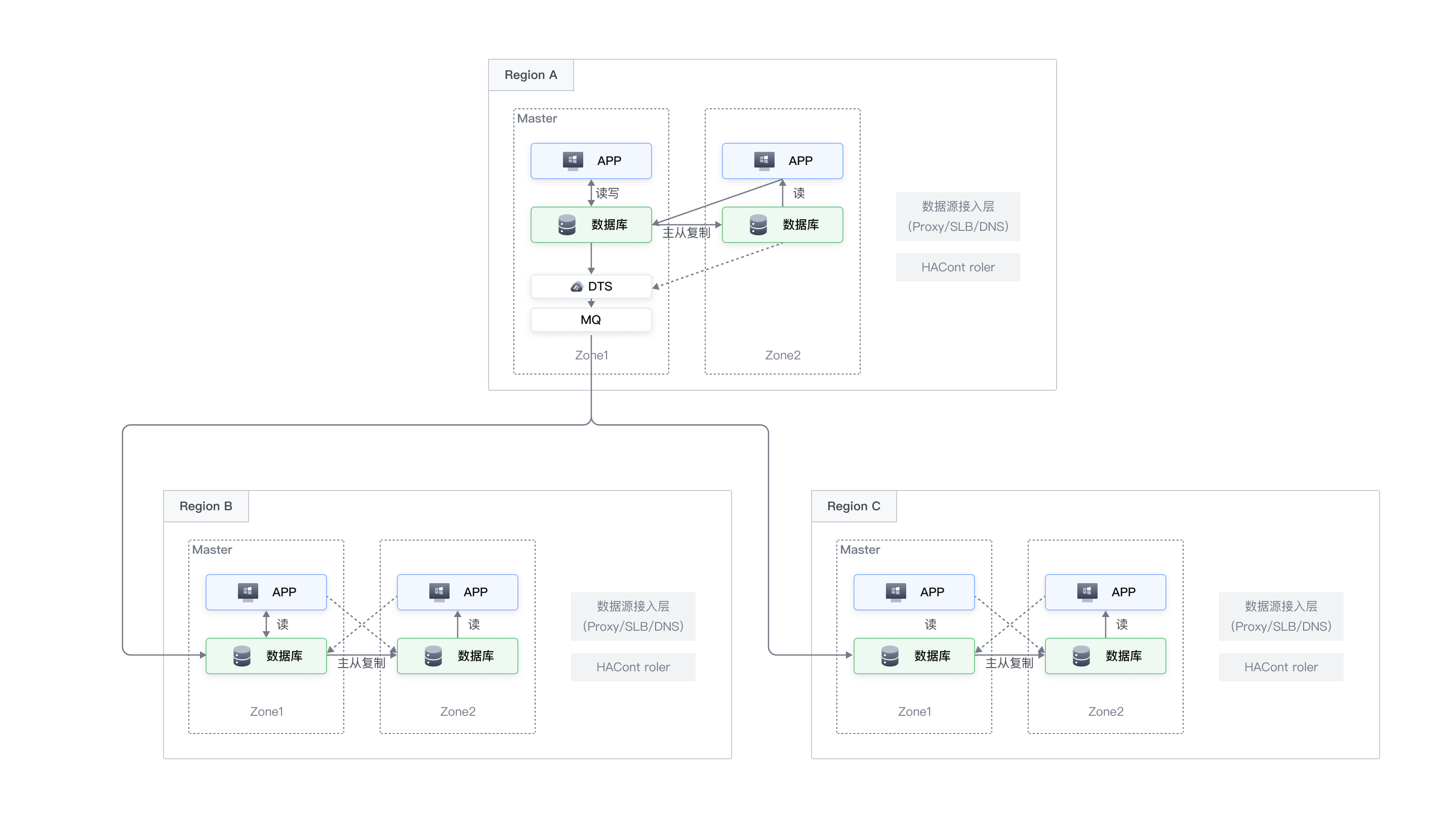 | The key features for the single-write and multi-read architecture are as follows.
|
Multi-write and multi-read | 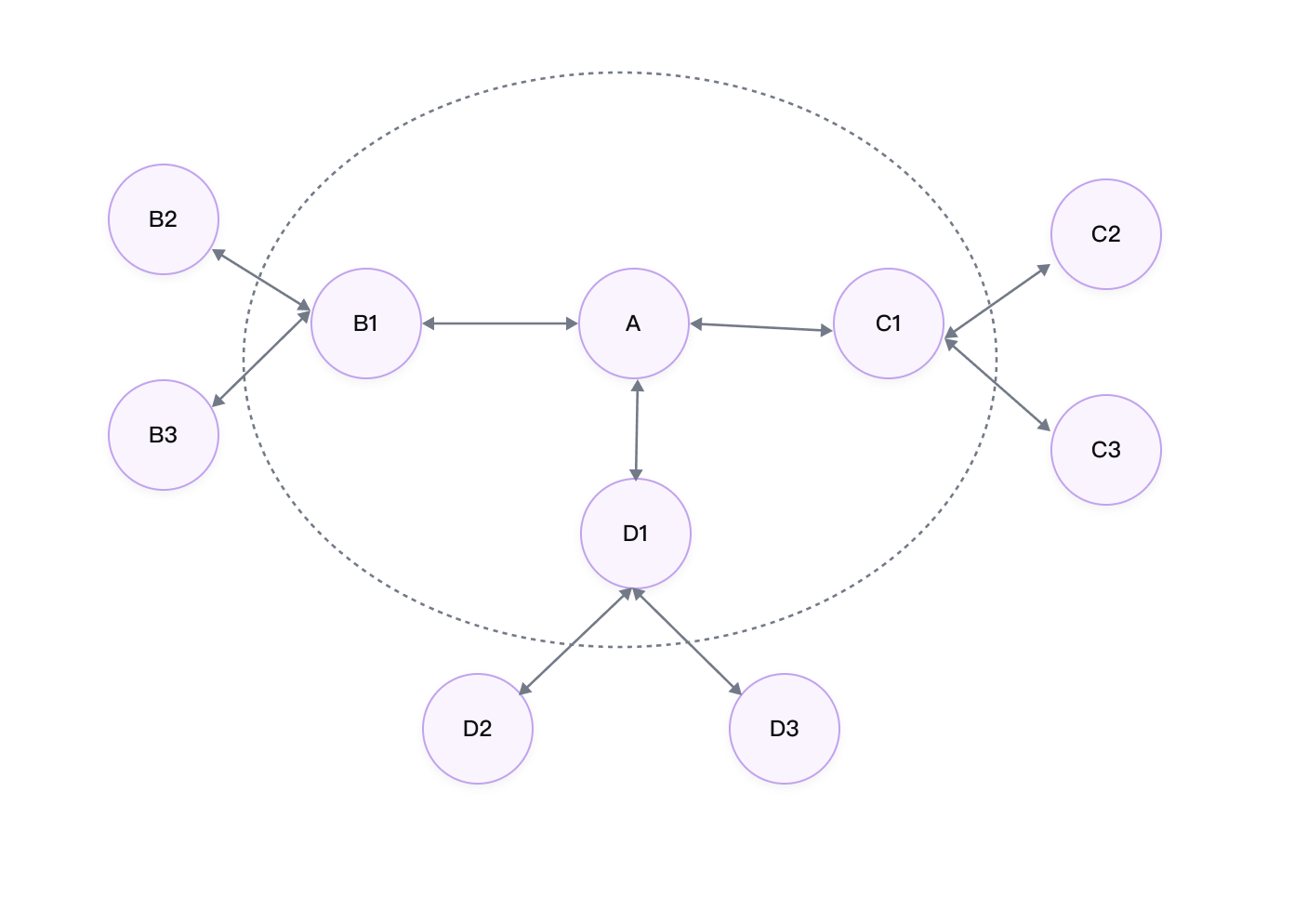 | The key features for the multi-write and multi-read architecture are as follows.
The overall data latency is related to the complexity of the topology. The more complex the topology, the greater the latency.
tip The multi-write and multi-read topology requires unitization transformation of businesses. For more information, refer to Business unit splitting. |
Conflict resolution strategy
Bidirectional synchronization process
Create a MySQL bidirectional synchronization task
Precautions
- In bidirectional synchronization of MySQL, do not perform DDL operations simultaneously on both the source and target database, or the synchronization task may fail. Bidirectional synchronization tasks only support synchronizing DDL operations from the forward task to the target database, and currently do not support synchronizing DDL from the reverse task. If you need to synchronize DDL operations from the reverse task, you can first adjust the DDL synchronization direction of the bidirectional synchronization task and then perform the DDL operations to ensure data consistency.
- To ensure data consistency, it is recommended that rows with the same primary key value be updated in only one instance. If updated simultaneously, the system will handle it according to the primary key conflict handling method selected when configuring the data synchronization task.
- In a bidirectional synchronization topology, you need to configure both a forward synchronization task and a reverse synchronization task separately. For configuration methods, refer to Configuring a forward task and Configuring a reverse task.
- When performing OnlineDDL, forward compatibility must be ensured. For example, do not modify field types or reduce fields, as this may cause synchronization interruptions or data inconsistency. The forward-compatible table structure DDL list includes: create table, add column, modify column (increase field length), create index, and drop index.
- It is not recommended to use public networks for bidirectional synchronization, as they are prone to performance bottlenecks.
Step 1: Create a synchronization task
You can select the corresponding reference documentation based on your source and target database types to create a data synchronization task.
When creating a bidirectional synchronization task, select Bidirectional synchronization as the synchronization topology. For more information, refer to Data synchronization topology.
Step 2: Configure forward synchronization
After the bidirectional synchronization task is created, you can configure the data forward synchronization task via DTS. For more information, please refer to Configuring forward synchronization.
Step 3: Configure reverse synchronization
You can configure the reverse synchronization task after the forward synchronization task enters the incremental synchronization phase. For the configuration method, refer to Configuring reverse synchronization.
Traffic cutover
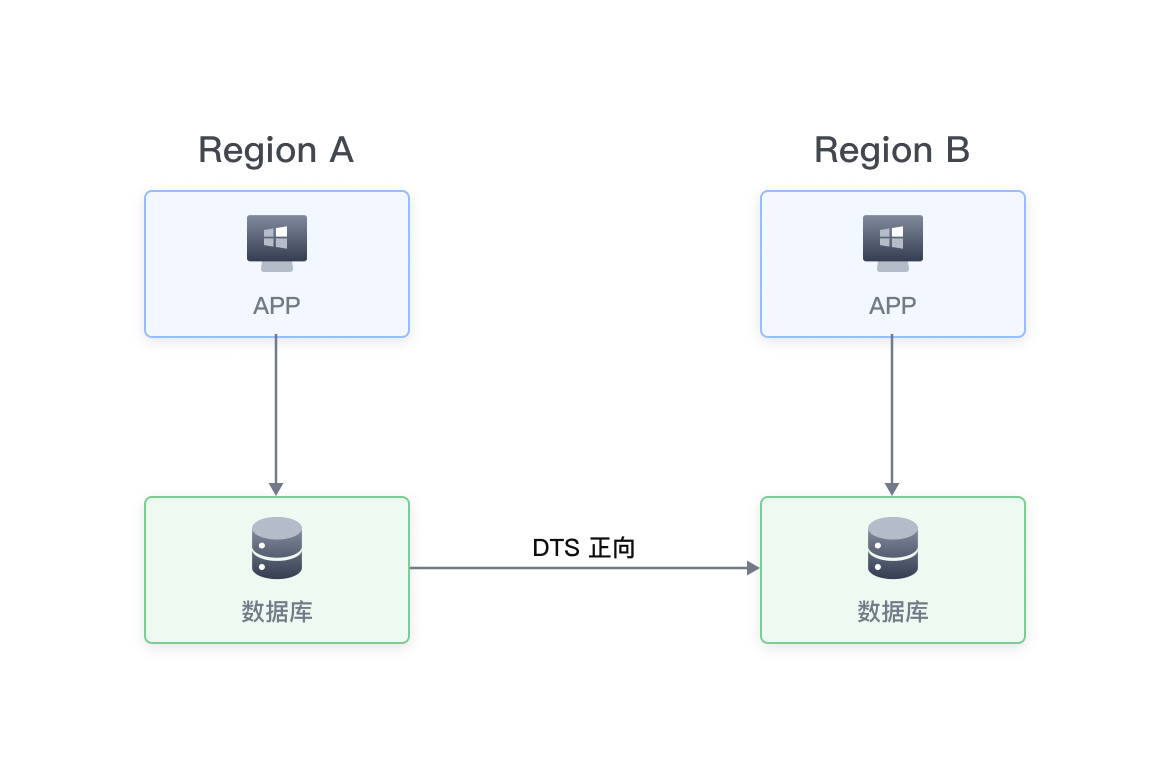
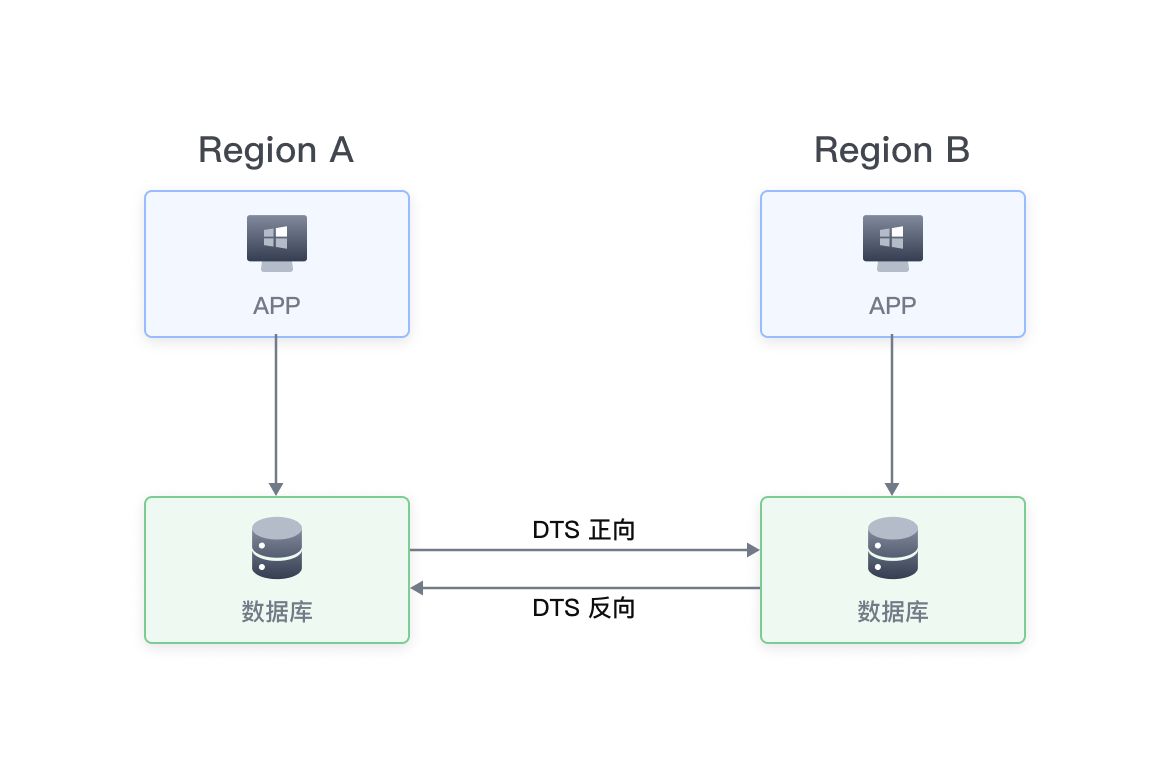
- Before performing any traffic cutover, a bidirectional link must be established. Do not start, stop, or create DTS links during traffic cutover, as this may increase the complexity of the switchover and make the process uncontrollable.
- During traffic cutover, write operations on the source end must be disabled to prevent concurrent business writes on both ends of the link at the same time.
Unidirectional traffic cutover
Bidirectional traffic cutover
Appendix
Business unit splitting
Unitization refers to dividing businesses into small business units according to specific dimensions. Each unit covers all the services required by the business and can independently process the entire business process. Each unit stores only a portion of the data, and the complete dataset is formed by integrating the data from all units. A "unit" can be migrated as a relatively independent entity or partially deployed to a different geographical location.
- The unitization of business components should adhere to the following principles to avoid data conflicts.
- The use of database auto-increment IDs is prohibited. Third-party ID generators should be adopted instead.
- It should be ensured that the data of each business unit is mutually independent, with minimal or no overlap.
- A bidirectional link should be established from the read-write nodes at both ends, which may affect the read and write performance of the business.
Business unitization background
Business unitization solution
Last updated: 2026.01.21 17:37:16
All rights reserved © Beijing Volcano Engine Technology Co., Ltd2024
