Volcengine Kubernetes Engine
Volcengine Kubernetes Engine
Volcengine Kubernetes Engine


Document
Volcengine Kubernetes Engine
What's New
History feature release notes
Kubernetes version release notes
Containerd runtime release notes
Add-on release notes
Monitoring add-ons
Scheduling add-ons
DNS add-ons
Security add-ons
GPU add-ons
Sandbox add-on
Security announcements
Product Announcement
Historical announcements
Overview
Getting started
User guide
Clusters
Creating clusters
Connecting to clusters
Upgrading clusters
Node pool
Creating node pools
Scaling out/in node pools
Nodes
Authorization management
Image
Namespaces
Networking
Cluster network
Container Network
Service
LoadBalancer
CLB
Ingress
APIG Ingress
ALB Ingress
Customize ALB Ingress forwarding rules
Certificate and security
CLB Ingress
Nginx Ingress
Gateway API
Workloads
Creating workloads
Configure workloads
Pods
Configuration management
Image acceleration
Storage
FSX client
EBS Volumes
TOS Volumes
NAS volumes
FSX access methods
NFS access methods
EFS volumes
vePFS volumes
FSX access methods
vePFS Client access methods
NFS access methods
CloudFS volumes
Local volumes
Autoscale
Node autoscaler
Workload autoscaler
Horizontal Pod Autoscaler (HPA)
Cron Horizontal Pod Autoscaler (CronHPA)
Intelligent Horizontal Pod Autoscaler (IHPA)
Horizontal Pod Autoscaler based on event-driven (KEDA)
Add-on management
Network add-ons
Storage add-ons
Monitoring add-ons
Scheduling add-ons
DNS add-ons
GPU add-ons
Core add-ons
Sandbox add-on
Upgrading add-ons
Heterogeneous computing
NVIDIA GPU
mGPU scheduling
RDMA high-performance computing
Scheduling management
Topology-aware scheduling
QoS-aware scheduling
Observability
Log management
Basic observation
Setup & Configuration
Cluster observation
Storage observation
Other observation
Using metrics
Full stack observation
Alert management
Diagnosis and inspection
Node check and self-healing
Application center
Backup center
Stability
Large-scale cluster management
Best practices
Authorization
Clusters
Nodes and node pools
Networking
Storage
Scheduling
Observability
Solution
Security and compliance
API reference
Cluster management
NodePool management
Node management
Virtual nodes management
Add-on management
Tag management
Access policy management
Instance images management
Cloud native observability
Inspection and diagnosis
Task management
Volcengine Container Instance
Appendix
SDK reference
Development guide
Terraform
FAQs
General FAQs
Cluster FAQ
cluster management
cluster network
cluster upgrade
Node and Node pool FAQs
Authorization FAQs
Workload FAQs
Service and Ingress FAQs
Storage FAQs
Heterogeneous computing FAQs
Observability FAQs
Quota FAQs
Add-on FAQs
Cloud-native AI
ServingKit
LLM applications
ComfyUI application
Deploying the Al inference application through Helm
Deepseek practices
Qwen practices
Kimi practice
Seed practices
Best practices
DeepSeek model deployment
GLM model deployment
MiniMax model deployment
Qwen model deployment
Kimi model deployment
Volcengine Container Instance
What's new
Historical feature release notes
Product Announcement
Overview
Billing
User guide
Integrating with VCI
Virtual node
VKE cluster uses virtual nodes
Self-managed/third-party cluster uses virtual node
Creating an instance
General purpose instance
GPU-accelerated computing instance
VCI Agent Sandbox
Startup acceleration
E2B-based management
Upgrade guide
Networking
Monitoring
Scheduling
Container configuration
VCI Image Cache
Best practices
Security and compliance
FAQs
- Documentation
 Volcengine Kubernetes EngineVolcengine Kubernetes EngineUser guideWorkloadsWorkload overview
 Copy page
 Download PDF
Workloads
Workload overview
Copy pageDownload PDFWorkload overview
In Kubernetes, a workload is an abstract model representing a group of pods (a group of containers). It can refer to any of the service entities, such as Deployment, StatefulSet, DaemonSet, Job, and CronJob. A workload is also known as a pod controller, which ensures that an expected number of pods of the desired type are running. Volcengine Kubernetes Engine (VKE) is built on native Kubernetes capabilities and supports full lifecycle management of container workloads.
Pods and workloads
A pod is the smallest deployable computing unit in Kubernetes. A pod encapsulates one or more containers, storage resources (volume), an independent network IP address, and policies for managing and controlling how containers run.
A workload is used for managing pods. A workload can manage one or more pods, and supports multi-version management, rolling updates, and automatic recovery capabilities. You can use workloads and pod templates to create pods that meet your business requirements.
Deployments
A Deployment can contain one or more pod replicas, each with the same role. The system automatically distributes requests among the multiple pod replicas in the Deployment.
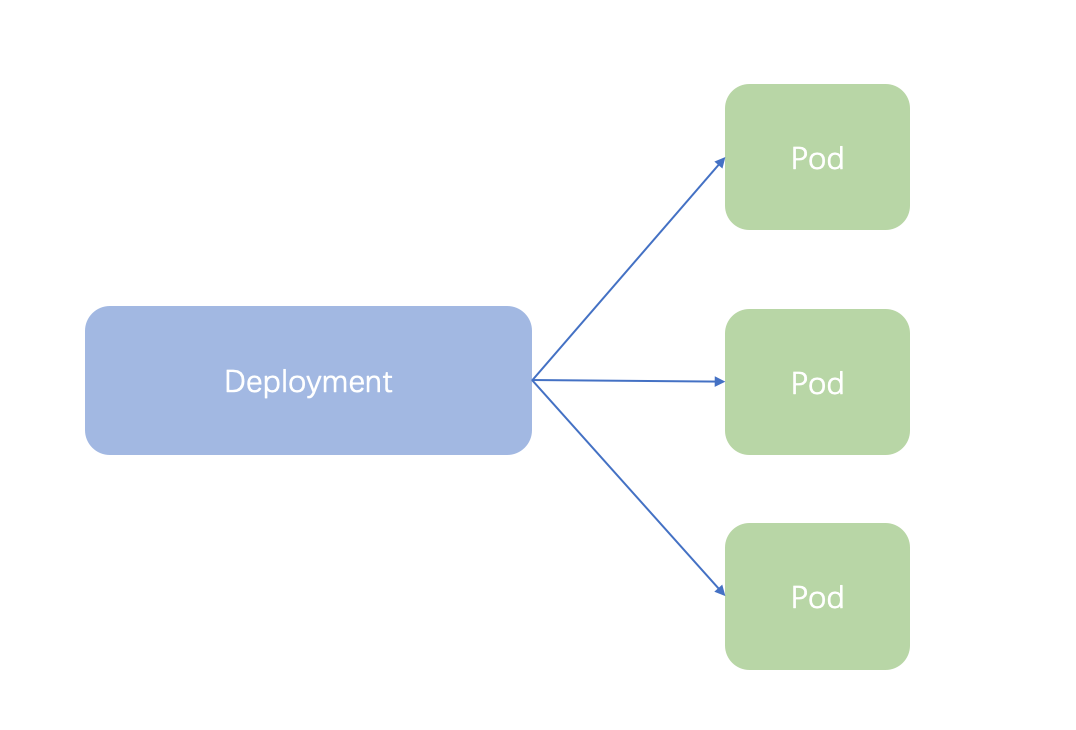
A Deployment integrates the functionalities of deployment, rolling updates, replica creation, and rollback and enables unattended operations. This significantly reduces the complexity and operational risks during the deployment process. A Deployment is commonly used to deploy stateless applications. Compared to stateful applications, Deployments can enable automated and flexible scaling.
StatefulSets
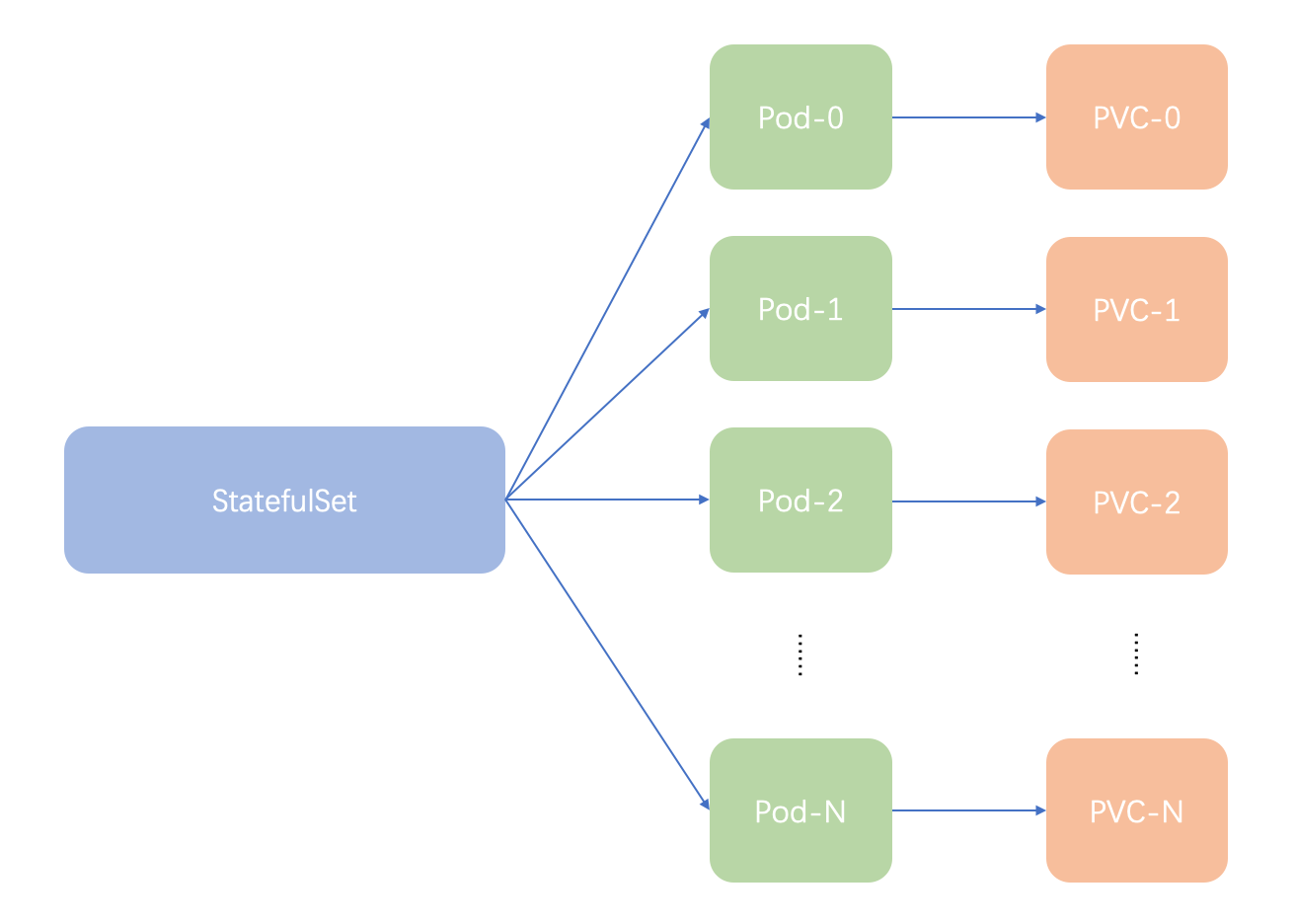
Similar to Deployments, StatefulSets manage application deployment and scaling. Additionally, StatefulSets provide persistent storage and stable network identifiers for pods, enabling the deployment of stateful services such as databases, caches, and similar applications.
DaemonSets
A DaemonSet ensures that all (or some) Nodes run a copy of a pod. When nodes are added to the cluster, pods are added to them. When nodes are removed from the cluster, those pods will be reclaimed. Deleting a DaemonSet will delete all pods that it created. DaemonSets are node-specific. If a node becomes unavailable, the pods are not recreated on other nodes.

DaemonSet is applicable to foundational system-level applications such as log collection and resource monitoring. These applications need to run on every node and do not require many instances.
Jobs and CronJobs
Jobs and CronJobs manage batch processing of short-lived one-off tasks, executing them only once. They ensure the successful completion of one or more pods in batch jobs. Jobs and CronJobs are applicable to one-off tasks, such as those in continuous integration.
- Job: Controls batch jobs. Pods managed by a Job will automatically exit (and the pods will be deleted automatically) once they successfully complete the task as per the specified settings.
- CronJob: A CronJob is a time-based Job, similar to a Crontab expression on a Linux system, that runs the specified Job at the specified intervals.
Workload lifecycle description
Status | Description |
Status | Description |
Ready | When replicas are in the Ready state, the workload is in this state. The Ready n/n displayed on the console indicates Number of Ready replicas / Total number of replicas. |
Updated | When replicas are in the Update status, the workload is in this state, which indicates that the replicas have completed the update. |
Available | When replicas are in the Available state, the workload is in this state, which indicates that the replicas within the workload are running normally. |
Active | When replicas are in the Active state (the replicas are running normally and have not been suspended), the workload enters this status. |
Succeeded | When replicas are in the Succeeded state, the workload is in this state. This state only appears in Job and CronJob workloads. |
Fail | When replicas are in the Failed state, the workload is in this state. |
Last updated: 2026.07.24 14:51:37
All rights reserved © Beijing Volcano Engine Technology Co., Ltd2024
